Strong adhesion across glass, metal and plastic — How does UV flatbed printing make it possible?
A frequent question in real world UV flatbed printing: how do prints stay firmly bonded on vastly different substrates such as glass, metal and plastic? The answer lies in the interaction mechanism between UV ink and printing materials.
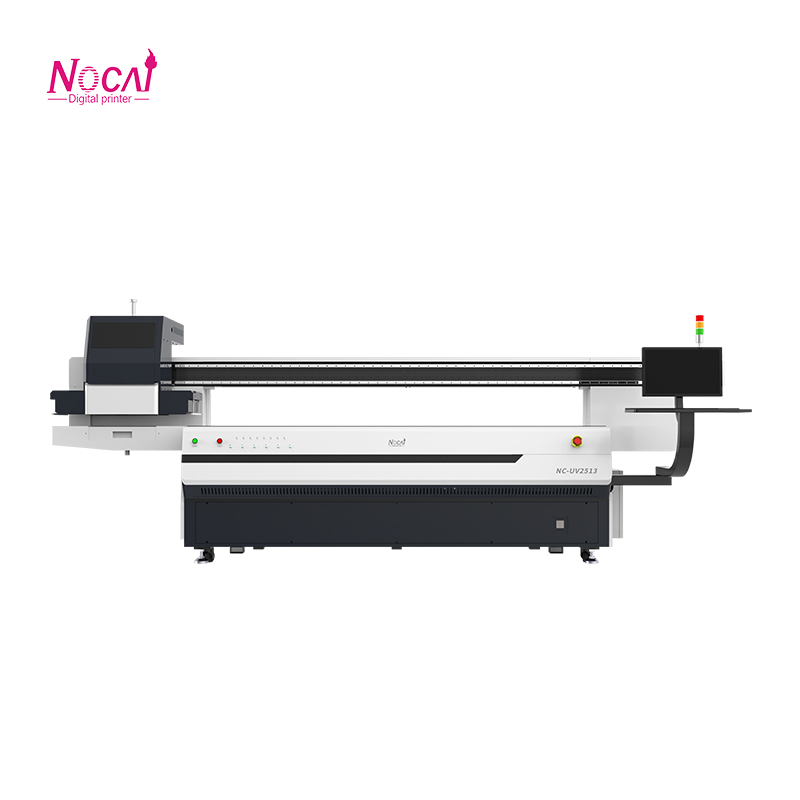
UV ink adhesion comes from a combination of physical and chemical effects. Liquid ink is jetted onto the substrate, then exposed to UV light. Photoinitiators inside the ink absorb UV energy and trigger cross linking reactions, turning liquid ink into a solid polymer network in seconds. This curing process requires no solvent evaporation or material penetration, so a tough bonded layer can form even on non porous, low surface energy materials like glass and metal.
Adhesion performance varies across substrates, much like double sided tape sticks differently to glass versus wood. Surface smoothness and material compatibility both affect bonding strength. For UV ink to grip well, its components need to interact with the substrate. Metals feature thin surface oxide layers; glass has a dense, ultra smooth surface; plastics consist of flexible molecular chains — each substrate presents a distinct surface condition.
Ink manufacturers tune formulations for different materials. Certain ink components form strong bonds with the oxide layer on metal; other components optimize surface bonding for glass. For plastics, ink resins intertwine with plastic molecular chains. Ink formulas are pre calibrated at factory to suit multiple materials, activating corresponding bonding mechanisms for different surfaces.
Besides chemical ink design, substrate pre treatment plays a key role. For low surface energy plastics, overly smooth glass or metal, flame treatment, corona treatment or specialized coating raises surface energy and micro roughness to support ink bonding. Proper pre treatment delivers reliable print results on otherwise tricky substrates.
Curing parameters on the printer also impact adhesion. UV lamp power, exposure time and curing distance determine how thoroughly ink cross links. Insufficient curing weakens adhesion, while over curing makes the ink layer brittle and crack prone. Adjusting curing settings when switching materials is essential for stable bonding.
To sum up, reliable adhesion on glass, metal, plastic and more is achieved by the synergy of ink formulation, substrate pre treatment and curing conditions. Understanding this mechanism helps operators fine tune processes for consistent, high quality print outputs.
-

Thank You for Every Connection! Nuocai Wraps Up the Shenzhen Gifts & Home Fair Successfully — Visit Our Factory to Discover More
2026-10-23 -

Final Countdown! Day Three at the Shenzhen Gifts & Home Fair: Nuocai’s Last-Chance Show Specials Are Bigger Than Ever
2026-10-22 -

Day Two at the Shenzhen Gifts & Home Fair: Nuocai Keeps the Crowds Coming! Live Demos of 3D Figures, 2.5D Relief Crafts, Perfume Bottles, Tumblers, and UV DTF Stickers
2026-10-22 -

A Decade of Excellence: Nuocai Unveils Its Latest Innovations on Day One of the Shenzhen Gifts & Home Fair! Full-Color 3D Printing Steals the Show
2026-10-20 -

Nuocai Successfully Concludes PRINTING United Expo 2026 in Las Vegas
2026-09-28 -

Making an Impact in Las Vegas — Nuocai Makes a Strong Debut at PRINTING United Expo 2026
2026-09-24 -

Growing Together, Moving Forward with Purpose | Guangzhou Nuocai 2026 Production Trainee Representative Symposium
2026-08-29 -

A Truckload of Henan Melons, A Thousand-Mile Bond with Guangdong|Nocai’s Charitable Purchase: Supporting Farmers, Refreshing Our Team
2026-08-11 -

Topping-out Ceremony Successfully Held! NOCAI Digital’s Capital Increase & Capacity Expansion Project Officially Topped Out, Embarking on a New Journey of Smart Manufacturing
2026-04-28 -
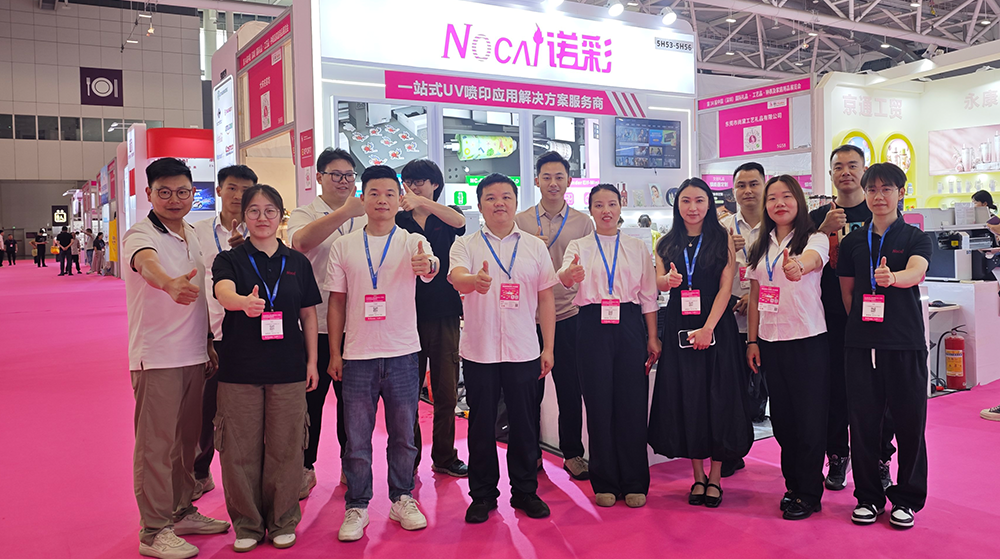
NOCAI’s Shenzhen Gift Fair Successfully Concluded. You Are Warmly Invited to Visit Our Factory for New Cooperation
2026-04-28
-

Strong adhesion across glass, metal and plastic — How does UV flatbed printing make it possible?
2026-11-24 -

Break free from material limitations — bring your creativity to life on any surface with the A2 Flatbed UV Printer.
2026-11-24 -

How Important Is UV Ink Concentration to Print Quality?
2026-11-17 -

Understanding UV Primers: Common Types and Their Applications
2026-11-17 -

What Can a 6090 UV Flatbed Printer Actually Do? Here’s the Full Picture
2026-11-10 -

Is Your Phone Case Artwork Always Misaligned? How Small Flatbed UV Printers Solve the Problem
2026-11-10 -

Beyond Simulated Mother of Pearl: What Other Traditional Crafts Can UV Printers Replicate?
2026-11-04 -

From Flat to Emboss: How Compact UV Printers Build Tactile Texture
2026-11-04 -

Tackling the Four Major Pain-Points of Cylindrical UV Printers: Height Variation, Cones, Special-Shaped Parts & Transparent Materials
2026-10-27 -

Simulating Mother-of-Pearl Inlay with UV Printers
2026-10-27
CONTACT US


Guangzhou Nuocai Digital Products Co., Ltd.
If you would like to keep touch with us directly, please go to contact us
-
![]()
Home
-
![]()
Tel
-
![]()
Email
-
![]()
Contact


